
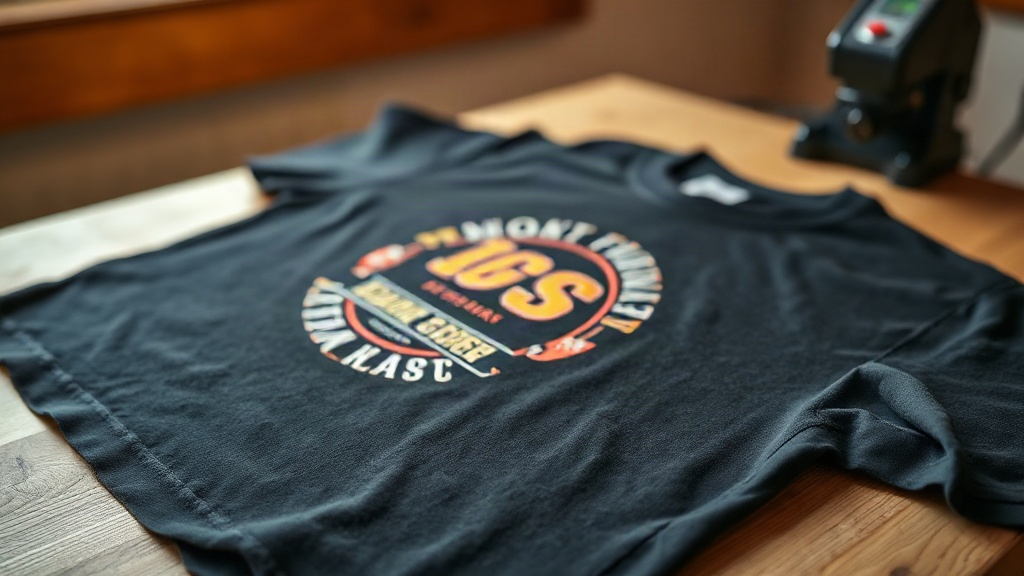
Black and navy garments are unforgiving. A print that looks crisp on a white tee can turn muddy the moment it lands on a dark surface, because there is no light background to bounce color back at the eye. That is the moment most people start asking harder questions about DTF printing, and for good reason. Direct to film transfers are built around a white ink layer that sits under the color, and how you handle that layer decides whether your design pops or disappears.
I have pressed hundreds of transfers onto dark cotton, blends, and even some coated polyester, and the failures I see are rarely about the printer itself. They come from film choice, powder application, and press habits. This guide walks through what actually matters when your substrate is dark.
Why Dark Fabric Changes the Rules
On a light shirt, the fabric acts as a natural reflector. Pigment inks appear more saturated because the surrounding surface is bright, so small inconsistencies in ink density get hidden. On black, that safety net is gone. Any thin spot in the color layer reads as a dark patch, and any uneven white base shows through as a gray halo.
This is not a flaw in DTF technology. It is simply how layered printing works. The white ink layer does the heavy lifting, blocking the garment color and giving the CMYK inks something opaque to sit on. When that base is applied correctly, colors on black can look almost identical to colors on white. When it is applied poorly, you get the washed out, patchy results people complain about in forums.
The practical takeaway is that dark garments demand more attention to the white layer than anything else in the process. Treat it as the foundation, not an afterthought.
Choosing the Right Film and Ink Setup
Not all DTF film behaves the same on dark fabric. Double sided matte film tends to release more cleanly and holds powder better, which matters more when you are building a thick white base. Single sided film can work, but the margin for error shrinks.
White ink volume
Most RIP software lets you control white ink density separately from the color channels. On dark shirts, a two pass white layer is a common starting point. Some shops push it to three passes for very deep blacks or heavy poly blends, but more is not automatically better. Too much white ink can cause the transfer to feel stiff and can lead to cracking along fold lines.
Powder selection
Fine particle adhesive powder gives a smoother hand feel and better detail retention. Coarser powder is more forgiving during shaking but can leave a slightly grainy surface. For dark shirts where the print sits visibly on top of the fabric, a finer powder usually looks more professional.
Press Settings That Actually Work
Temperature, pressure, and time are the three levers you control, and they interact. Here is a baseline I use for cotton and cotton poly blends.
- Temperature: 160 to 165 degrees Celsius for most films
- Pressure: medium to firm, enough that you can see the fabric texture through the transfer
- Time: 12 to 15 seconds for the initial press
- Peel: warm peel for most double sided films, cold peel for some specialty stocks
These numbers are starting points, not gospel. Humidity in your workspace, the thickness of the garment, and the age of the film all shift the sweet spot. Keep a notebook and log what worked. Two or three test presses on scrap fabric will save you a ruined order later.
The second press matters
After peeling the carrier film, a short second press of 5 to 8 seconds with a cover sheet smooths the surface and improves wash durability. This step gets skipped constantly, and it is often the difference between a print that survives twenty washes and one that starts lifting at fifteen.
Testing Durability Before You Sell
Anyone can make a transfer look good straight off the press. The real test is what happens after a customer wears it for a month. Before committing to a production run on dark garments, run a wash test.
- Press a sample with your standard settings.
- Wash it inside out in cold water with a normal load.
- Dry on low heat or hang dry.
- Repeat five times and inspect the edges.
If the edges are lifting or the white base is cracking, adjust your powder application or increase the second press time. Dark shirts hide nothing, so a failed wash test is actually useful information rather than a setback.
Common Mistakes on Dark Garments
Over the years I have watched the same issues repeat across different shops. These are the ones worth fixing first.
- Running white ink at the same density as light shirt jobs, which leaves the color layer weak
- Shaking off too much powder, so the transfer has nothing to bond with
- Pressing at too high a temperature and scorching the film before the adhesive activates
- Peeling too early or too late for the specific film type
- Storing finished transfers in humid rooms where the powder absorbs moisture
Each of these is easy to correct once you know to look for it. The trick is building a consistent routine so you catch problems before they reach the customer.
Frequently Asked Questions
Can DTF printing be used on black polyester shirts?
Yes, but polyester needs lower press temperatures, usually around 140 to 150 degrees Celsius, to avoid dye migration. Some shops use a low bleed white ink or a barrier layer to stop the garment dye from bleeding through the print over time.
How many washes does a DTF print on a dark shirt typically survive?
With correct pressing and a proper second press, most transfers hold up for 30 to 50 washes when washed inside out in cold water. Results drop sharply if the shirt is washed in hot water or dried on high heat.
Why does my white base look gray on black fabric?
This usually means the white ink layer is too thin or the press pressure is uneven. Increasing white passes or adjusting pressure so the transfer makes full contact across the design often solves it immediately.
Do I need a special film for dark garments?
Not strictly, but double sided matte film tends to perform better because it holds powder more evenly. If you are printing mostly dark shirts, it is worth testing a few film brands to see which one gives you the cleanest white base.
Is DTF better than screen printing for small dark shirt orders?
For short runs and multicolor designs, yes. There is no screen setup cost, so a single dark shirt with a detailed graphic is practical. For very large runs of a simple one color design, screen printing can still be more economical per unit.